AI-powered SESAR project shows potential for efficiency gains
A new AI-powered arrival sequencing tool developed under the SESAR Joint Undertaking’s ORCI project has demonstrated strong potential to improve efficiency at busy European airports while reducing air traffic controller workload.
Human-in-the-loop validation campaigns carried out with ENAIRE and NAV Portugal tested the system in high-density traffic scenarios at Barcelona-El Prat Airport and Lisbon Airport, involving 16 experienced air traffic controllers working in realistic, high-density traffic scenarios.
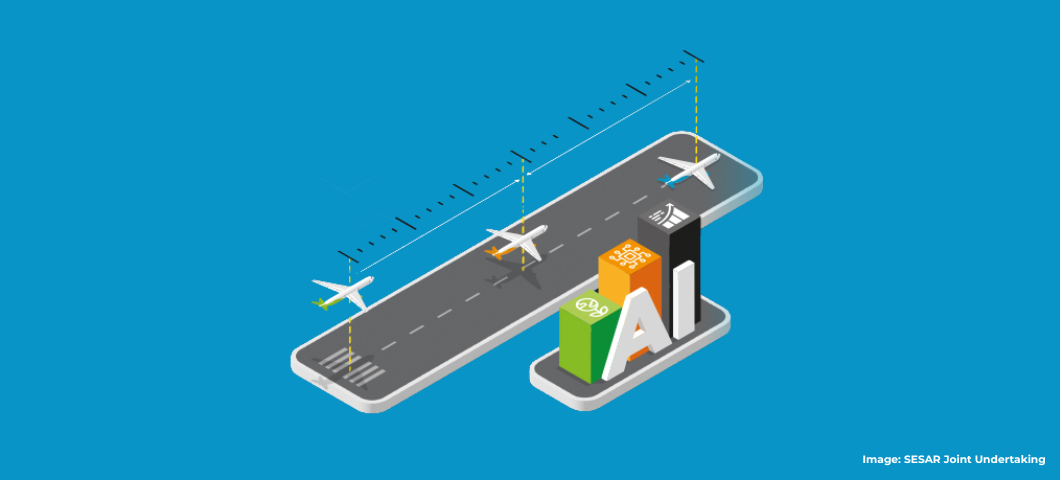
The ORCI tool provides controllers with real-time predictions of aircraft spacing outcomes following vectoring instructions, helping stabilise arrival flows during peak demand. Simulations showed significant improvements in spacing accuracy compared to current operations, with mean spacing errors reduced by 47% in Barcelona and 43% in Lisbon.
Controllers also reported a substantial reduction in cognitive workload, as the tool limited the need for continuous manual estimation of spacing and turn timing. Feedback highlighted ORCI’s ability to reduce ‘chain reactions’ caused by spacing deviations, supporting smoother inbound traffic streams and more predictable runway operations.
The results mark an important step towards operational deployment, demonstrating the impact of SESAR innovation and how AI can support safer, more efficient airport arrival management while preserving controllers’ final decision-making authority.
Find out more in the story here.