SAF supply grows under ReFuelEU, but challenges remain
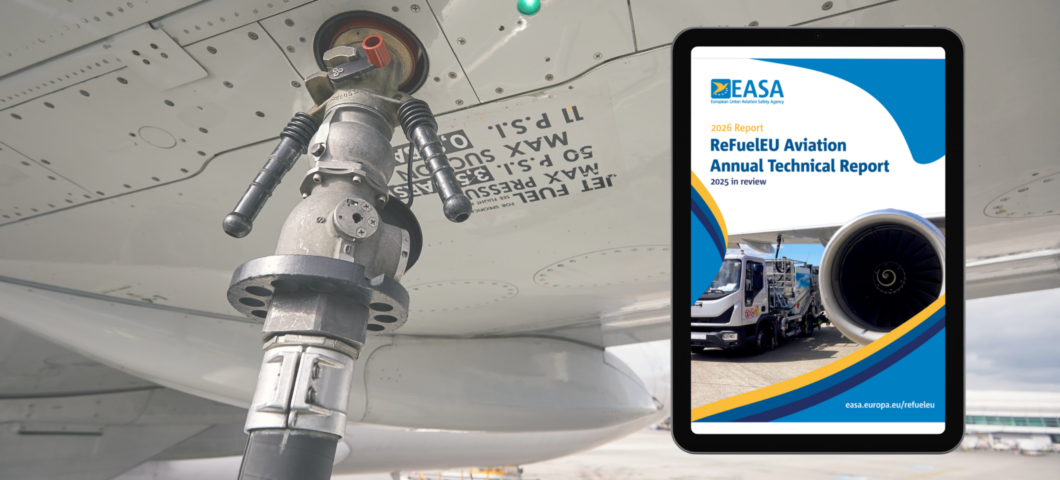
The European Union Aviation Safety Agency (EASA) published its 2026 ReFuelEU Aviation Annual Technical Report on 17 September, providing the first comprehensive assessment of the implementation of the ReFuelEU Aviation Regulation based on data from 2025, the first year in which its main obligations applied. The report shows a substantial increase in SAF supply across the EU, but also highlights a number of challenges that will need to be addressed as the market develops.
SAF supply increased from 193,000 tonnes in 2024, representing 0.6% of aviation fuel supplied, to 1.1 million tonnes in 2025, or 2.79%. This exceeded the 2% ReFuelEU target for 2025. The increase also delivered significantly greater climate benefits, with lifecycle emissions savings rising from around 0.71 million tonnes of CO₂e in 2024 to 3.77 million tonnes in 2025.
Availability across the airport network has also improved considerably. SAF was supplied at 121 airports across all 27 EU Member States in 2025, representing around 79% of Union airports, compared with 33 airports in 12 Member States in 2024. However, more than one in five Union airports still did not receive SAF. A robust European Book & Claim mechanism could complement physical supply, allowing airports and airlines across the network to support SAF uptake where direct physical access remains limited. ACI EUROPE has advocated for such a mechanism to improve the efficiency of the SAF market, facilitate wider uptake and support more cost effective supply chains.
The report also points to the continued geographical concentration of SAF supply. Five Member States, the Netherlands, Spain, Germany, Italy and France, accounted for 74% of total SAF supplied in 2025. This represents a significant improvement from 99% in 2024, but the Netherlands alone accounted for 29% of EU SAF supply. Greater geographical diversification will therefore remain important to ensure that SAF becomes more widely available across the European airport network.
The resilience of SAF supply chains is another area requiring attention. While 84% of SAF supplied at EU airports was produced within the EU, 85% of the feedstocks used originated outside the EU. China accounted for 61% of imported feedstocks, while used cooking oil remained the dominant feedstock, representing around 80% of SAF supplied. Diversifying feedstocks and strengthening European production and supply chains will be important to support the long term growth of the market.
A particular challenge is the development of synthetic aviation fuels, or e-SAF. Although the project pipeline is growing, no large scale e-SAF facility in Europe has yet reached Final Investment Decision. With the first ReFuelEU synthetic aviation fuel sub target applying from 2030, projects need to progress from development to investment and construction well in advance. This will require stronger financial support, investment de-risking measures, appropriate SAF incentives and long term regulatory certainty to give investors the confidence needed to bring projects to FID and scale up European e-SAF production. EASA notes that around 50 projects are currently awaiting final investment decisions.
The first year of ReFuelEU therefore demonstrates clear progress in SAF deployment, while also highlighting where further action is needed. For airports, ensuring wider access to SAF, supporting more geographically balanced supply and enabling effective market mechanisms such as Book & Claim will be important as the EU moves towards its higher SAF targets. At the same time, the conditions must be created now to secure the investment and production capacity needed for the next stage of the transition, particularly for e-SAF.
Download the EASA ReFuelEU Aviation Annual Technical Report 2026 here.