
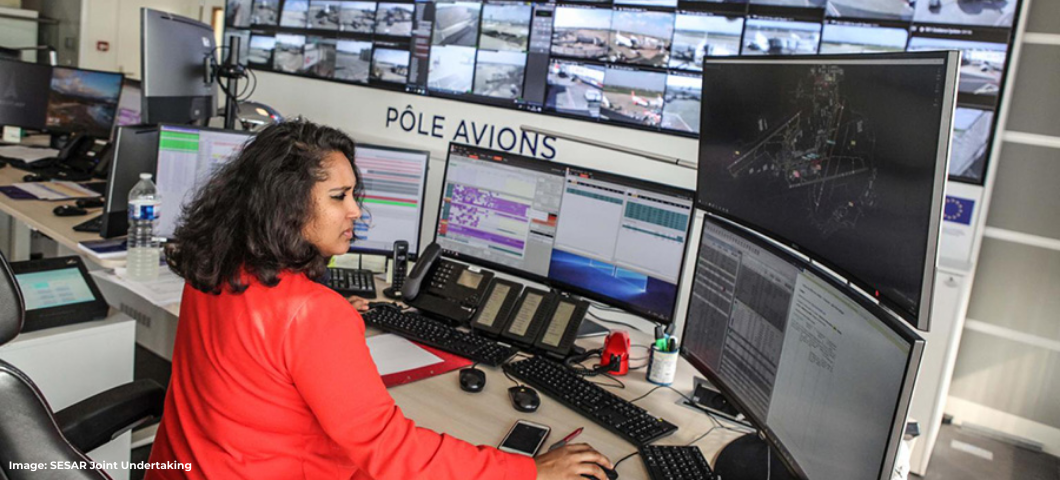
FASTNet project demonstrates selective flight management can reduce delays
Through a series of shadow and live validation exercises, the SESAR Joint Undertaking project FASTNet has demonstrated that more selective flight management can reduce delays compared to conventional Air Traffic Flow and Capacity Management (ATFCM) processes.
FASTNet – short for Future dAta Services and applicaTions for airports and Network – brings together airports, airlines, EUROCONTROL’s Network Manager, and industry partners to improve efficiency, predictability, and resilience from months ahead to the day of operations.
FASTNet relies on two complementary solutions. Solution 346 targets tactical, day-of-operations coordination, allowing airports to “cherry-pick” specific flights to adjust during bottlenecks, replacing broad delays with precise interventions. Shadow mode trials between Copenhagen Airport and Brussels Airport simulated capacity constraints at Brussels and assessed whether direct airport coordination could resolve issues more efficiently than traditional regulations, whilst shadow mode and live trials between Athens International Airport and Rhodes International Airport used real and generated flight data to manage traffic during busy periods.
Solution 347 addresses strategic and pre-tactical phases, forecasting passenger flows, baggage volumes, and airport resource demand weeks in advance. By sharing early flight intentions and operational predictions, airports and airlines can plan more effectively. Paris Orly Airport hosted live trials involving Air France, Transavia, and technology partner Indra, validating how predictive analytics can improve both local and network-level operations.
Its findings feed into SESAR’s innovation pipeline, supporting a more resilient, efficient, and sustainable aviation network under the Digital European Sky initiative.
Find out more: