
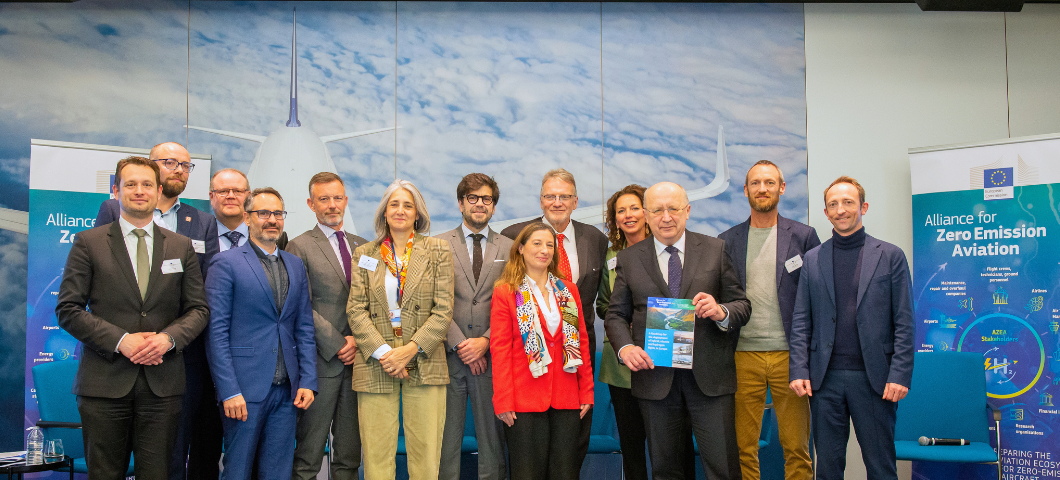
Alliance for Zero Emission Aviation launches Roadmap at 7th AZEA Assembly
The Alliance for Zero Emission Aviation (AZEA), of which ACI EUROPE is a member, has officially published the AZEA roadmap at their 7th General Assembly, hosted by EUROCONTROL.
Since its launch in 2022 by the European Commission’s Directorate-General for Defence Industry and Space (DG DEFIS), AZEA has grown into a powerful coalition of over 200 members. The alliance brings together aircraft manufacturers, airlines, airports, energy providers, fuel suppliers, regulators and advocacy groups – all united in a shared mission to achieve a sustainable aviation future.
The AZEA Roadmap reflects the European aviation sector’s commitment to leading the development and deployment of hybrid, electric and hydrogen propulsion technologies, strengthening both industrial competitiveness and strategic autonomy. It highlights the potential of these technologies to significantly reduce CO₂ emissions on intra-European routes while opening new opportunities for regional and sub-regional air mobility.
Deployment is expected to begin with smaller aircraft in the coming years, with larger aircraft entering the market after 2040. By 2050, up to 20,000 hybrid, electric and hydrogen-powered aircraft could be in operation. ACI EUROPE supports the Roadmap and its targets as a key step in advancing the decarbonisation of aviation.
Speaking at the panel “Is Europe’s aviation sector ready for hybrid, electric and hydrogen powered aircraft?”, ACI EUROPE Director General Olivier Jankovec highlighted that airports fully support the deployment of these technologies. The challenge, however, lies in preparing credibly while key variables such as technology pathways, energy demand, and infrastructure requirements continue to evolve.
Energy will be central to this transition. Airports are increasingly acting as energy hubs, with on-site renewable generation supporting both airport operations and surrounding communities and, in some cases, linking to future hydrogen infrastructure. This role will become more important as new aircraft technologies scale up.
The discussion made one point clear. The Roadmap sets the direction, but delivery will depend on coordinated action across the sector, supported by the right policy and regulatory framework, access to financing and close cooperation between all stakeholders.
Find out more here.